Weed of the Month October 2023: Giant Devil’s Fig / Devil’s Fig

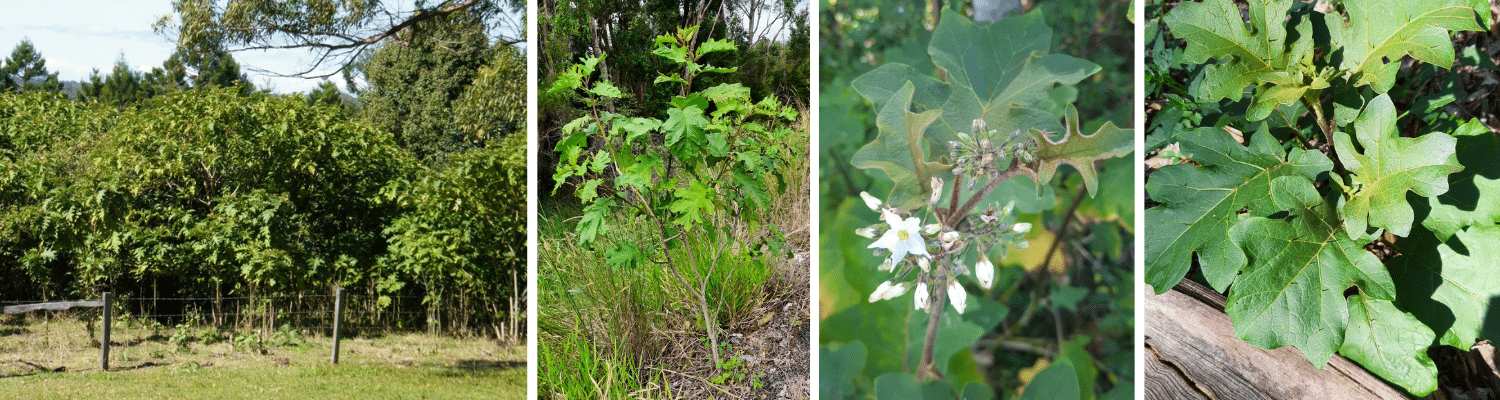
Photo 1: Infestation of Giant Fig NSW North Coast, Photo credit Kim Curtis FNCW Photo 2: Giant Devils Fig, Pacific Hwy. Photo 3: Flowers, Devils Fig, Lake Cathie. Photo 4: Devils Fig Seedling, Owen St, PM

Generally, we love our fig trees on the mid north coast, however a couple of silent invaders are giving them a bad name.

Giant devil’s fig and Devil’s fig (Solanum chrysotrichum and Solanum torvum) aren’t really figs at all, belonging to the Solanum genus with tomatoes, potatoes and eggplant. Originating in the Americas, these plants are occasionally used as rootstock for eggplant, and rarely, the fruit are consumed in Asian cooking. Unfortunately they can rapidly escape cultivation thanks to the fruit being attractive to birds and flying foxes, and become a major nuisance in riparian areas.
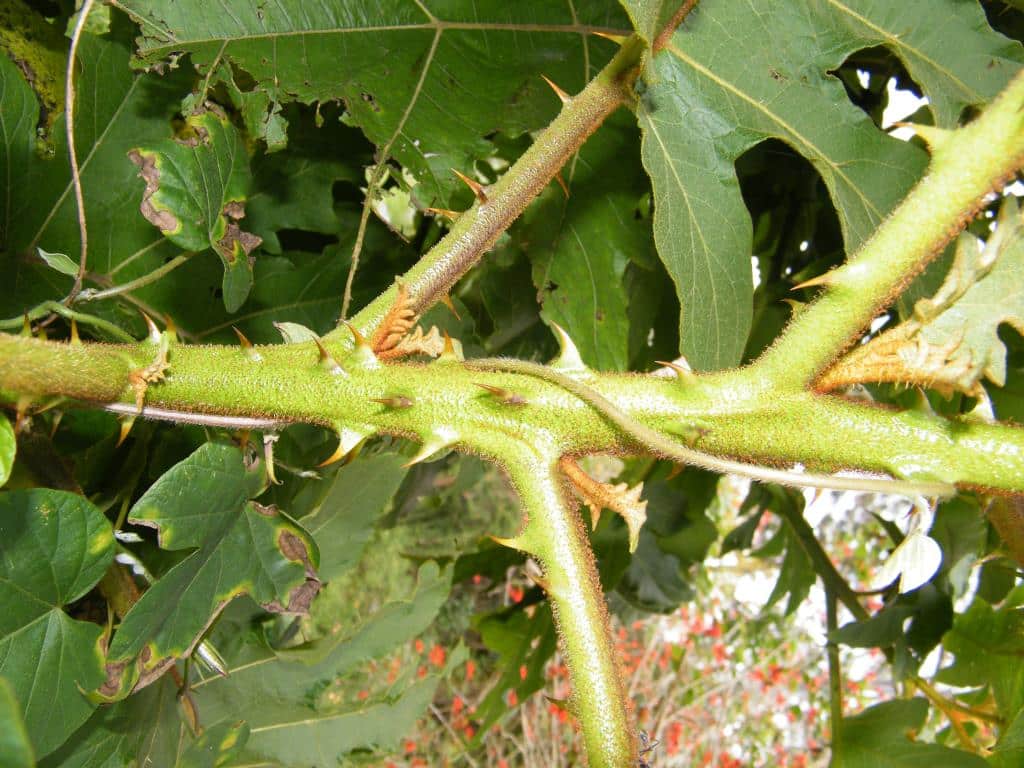
Prickle on Stem of Giant Devil Fig, Photo credit: Kim Curtis, FNCW

Giant devil’s fig grows to 4m tall (Devil’s fig to 3m) with fine brown or white hairs on stems and new leaf growth. Stems and leaves contain sharp prickles, making it hazardous to handle and capable of injuring people, livestock and wildlife. The leaves are large – up to 30 x 20cm for Giant devil’s fig, narrower for Devil’s fig. Giant devil’s fig leaves are deeply lobed, whereas Devil’s fig has shallow or no lobes.   Both plants have white, star-shaped flowers in clusters, followed by green berries up to 15mm across.

Once established, these plants germinate and grow rapidly in our environment, and can be spread long distances. The fruit can be toxic if eaten in large amounts. On farms and waterways they quickly outcompete native plants and block access. Suspected infestations must be dealt with quickly by contacting Council’s Biosecurity Officer for advice on control. For more information refer to NSW WeedWise

Related posts

Koalas may be an Australian icon, but they are also endangered – and as breeding season begins, they’ll be moving more often through our neighbourhoods, roads and bushland. Conservation Status...

At first glance Giant Parramatta Grass and Giant Rat’s Tail Grass can look like just another clump of grass in the paddock – but they can quickly take over. Invasive...

Council’s 2026 Annual Tree Planting Program has successfully wrapped up, with ninety-two advanced trees planted across the region this season. Following a dry spring and summer, the arrival of autumn...

More than 50 community volunteers joined Port Macquarie Hastings Council and Hastings Landcare at Bunderra Reserve, Beechwood, on Sunday 27 July to celebrate National Tree Day. Volunteers of all ages...

Weed of the Month October 2023: Giant Devil’s Fig / Devil’s Fig

Photo 1: Infestation of Giant Fig NSW North Coast, Photo credit Kim Curtis FNCW Photo 2: Giant Devils Fig, Pacific Hwy. Photo 3: Flowers, Devils Fig, Lake Cathie. Photo 4: Devils Fig Seedling, Owen St, PM

Generally, we love our fig trees on the mid north coast, however a couple of silent invaders are giving them a bad name.

Giant devil’s fig and Devil’s fig (Solanum chrysotrichum and Solanum torvum) aren’t really figs at all, belonging to the Solanum genus with tomatoes, potatoes and eggplant. Originating in the Americas, these plants are occasionally used as rootstock for eggplant, and rarely, the fruit are consumed in Asian cooking. Unfortunately they can rapidly escape cultivation thanks to the fruit being attractive to birds and flying foxes, and become a major nuisance in riparian areas.

Prickle on Stem of Giant Devil Fig, Photo credit: Kim Curtis, FNCW

Giant devil’s fig grows to 4m tall (Devil’s fig to 3m) with fine brown or white hairs on stems and new leaf growth. Stems and leaves contain sharp prickles, making it hazardous to handle and capable of injuring people, livestock and wildlife. The leaves are large – up to 30 x 20cm for Giant devil’s fig, narrower for Devil’s fig. Giant devil’s fig leaves are deeply lobed, whereas Devil’s fig has shallow or no lobes.   Both plants have white, star-shaped flowers in clusters, followed by green berries up to 15mm across.

Once established, these plants germinate and grow rapidly in our environment, and can be spread long distances. The fruit can be toxic if eaten in large amounts. On farms and waterways they quickly outcompete native plants and block access. Suspected infestations must be dealt with quickly by contacting Council’s Biosecurity Officer for advice on control. For more information refer to NSW WeedWise

Categories
Related posts

Our Urban Canopy is Growing

Council’s 2026 Annual Tree Planting Program has successfully wrapped up, with ninety-two advanced trees planted across the region this season. Following a dry spring and summer, the arrival of autumn

'Spot the Sticker' and WIN!

Batteries can spark fires and don’t belong in any of our bins.

To help our community learn how to dispose of them safely we’re giving away a $50 gift card every week for 6 weeks. 

Keep your eyes peeled for our “Don’t Bin Me” battery sticker on local waste trucks and you could score a $50 gift card! Click below to learn more about the competition and how to dispose of batteries safely.

Booking Enquiry Form

Please complete the form below and our education team will touch base soon to discuss your enquiry.

Booking Enquiry Form

Please complete the form below and our education team will touch base soon to discuss your enquiry.