Weed of the Month November 2023: Asparagus Weeds

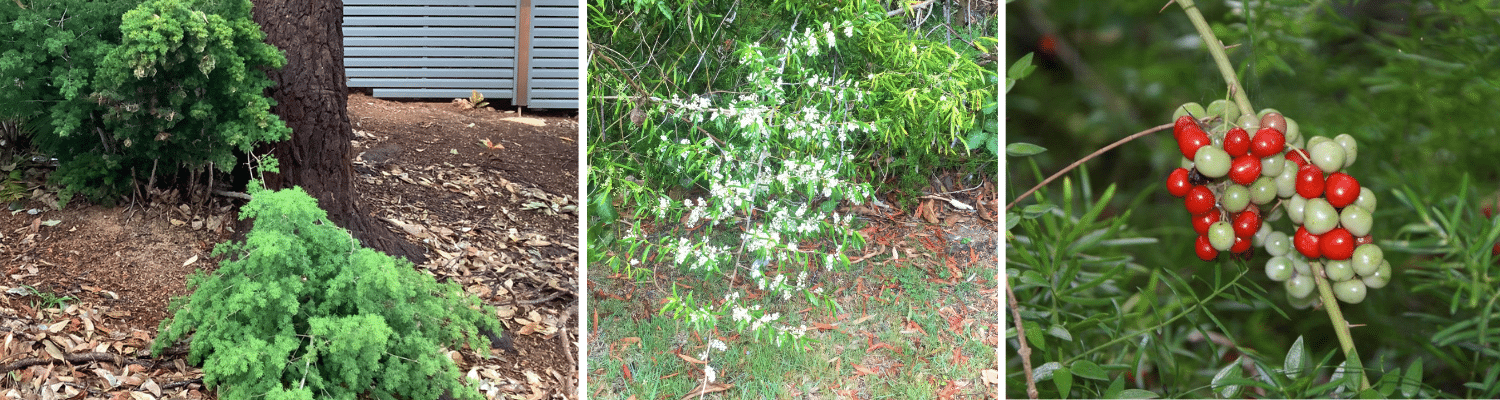
Left: Ming Asparagus found at St Agnes Village, Port Macquarie Centre: Asparagus falcatus flower Right: Ground Asparagus berries

Asparagus weeds (Asparagus species) are some of the most abundant environmental weeds on the mid north coast. Unlike their edible cousin, these plants readily invade coastal bushland areas causing significant loss of native plant diversity and robbing the ground of moisture.

Asparagus fern, Foxtail fern, Climbing asparagus fern, Bridal creeper, Ground asparagus, Ming asparagus and Sicklethorn are all present in our region. Ground asparagus is a weed of national significance and many of the other species are listed as key threatening processes to the survival of threatened native plants.

Introduced from Africa

Asparagus weeds are native to Africa and were introduced to Australia as ornamental plants. Though fern-like in appearance, they are perennial plants that form small white flowers followed by green berries that turn orange, red or black when mature. These berries are spread by birds throughout bushland and gardens. Asparagus weeds are also spread via garden waste dumping.
Common features across species

Though each species differs in appearance, they share a number of common features such as:

  • strong wiry stems that often have sharp spines. On some species a number of stems will grow from a single woody crown.
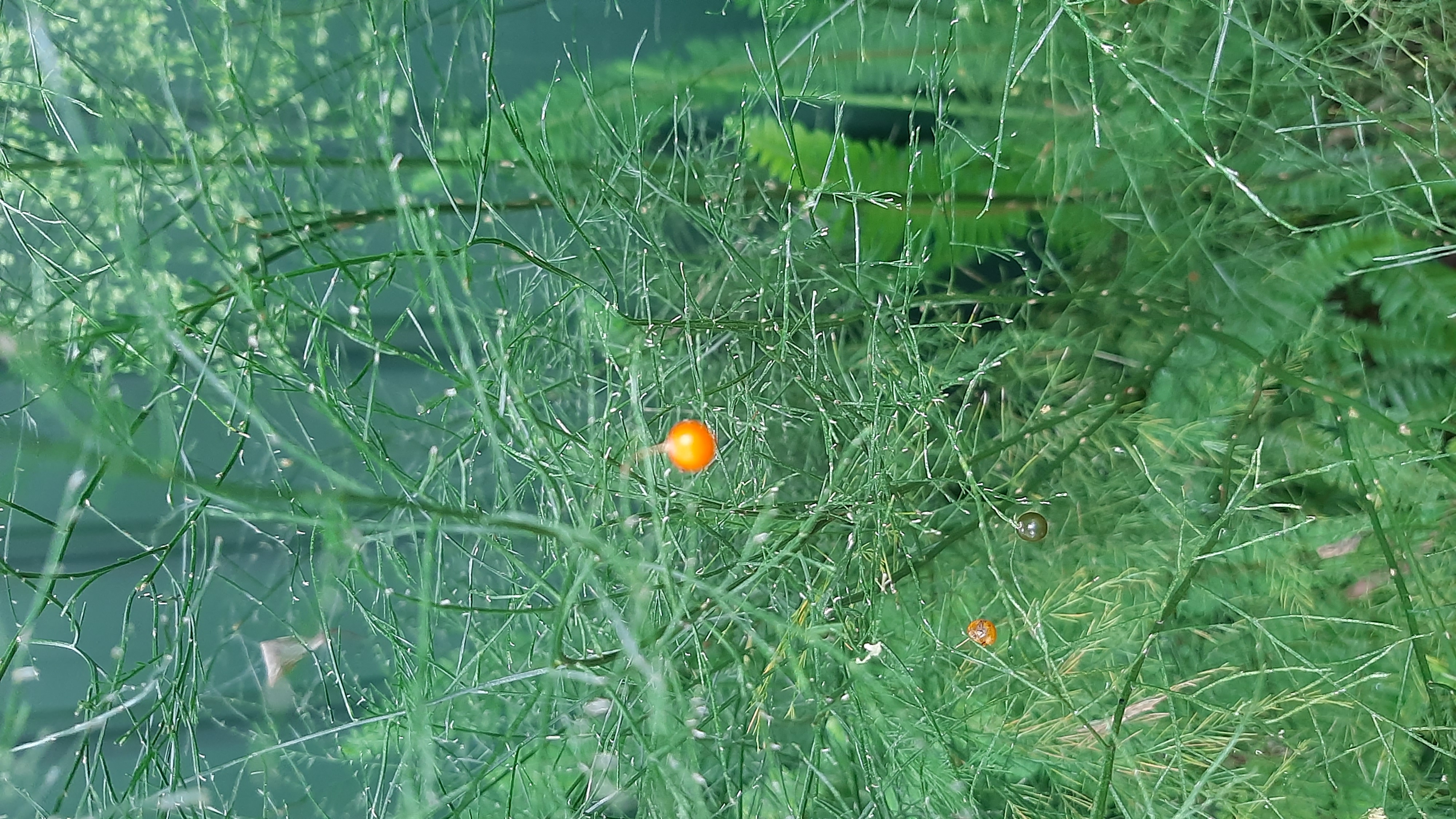
  • fine, feathery or narrow “leaves” that are actually modified stems called cladodes.
  • small white, star-shaped flowers that form clusters of berries.
  • white, watery tubers that form along the roots. These tubers do not regenerate if left in the soil as they are only for water and energy storage.
Eradication is challenging

Asparagus weeds are very persistent and difficult to eradicate. If digging plants out, take care to remove the central woody crown. A knife or small saw can be used to cut the roots off around the crown. Any herbicide treatment should add a penetrant to the mix as the waxy stems can repel most herbicides.

Call the biosecurity officer for help and advice

For more information, please visit the Asparagus Weeds page on NSW WeedWise and click on the individual species page. You can also call the Biosecurity Officer for help and advice on weed control.

Related posts

Hidden amongst the treetops of our region is a tiny but mighty hunter with a tail like a bottlebrush and a brutal breeding season where the males do not survive...

Biodiversity Month is a great reminder that our region is home to an incredible variety of plants and animals – including some very protective feathered locals.  As spring arrives, so...

Mexican Feather Grass may look like an attractive ornamental grass, but if it escapes from gardens it can become a serious problem for pastures, bushland and roadsides. This highly invasive...

Plum Pine (Podocarpus Elatus) is a distinctive native conifer with unusual fruit and strong links to our local rainforests. In our local bushland, we have only three species of native...

Weed of the Month November 2023: Asparagus Weeds

Left: Ming Asparagus found at St Agnes Village, Port Macquarie Centre: Asparagus falcatus flower Right: Ground Asparagus berries

Asparagus weeds (Asparagus species) are some of the most abundant environmental weeds on the mid north coast. Unlike their edible cousin, these plants readily invade coastal bushland areas causing significant loss of native plant diversity and robbing the ground of moisture.

Asparagus fern, Foxtail fern, Climbing asparagus fern, Bridal creeper, Ground asparagus, Ming asparagus and Sicklethorn are all present in our region. Ground asparagus is a weed of national significance and many of the other species are listed as key threatening processes to the survival of threatened native plants.

Introduced from Africa

Asparagus weeds are native to Africa and were introduced to Australia as ornamental plants. Though fern-like in appearance, they are perennial plants that form small white flowers followed by green berries that turn orange, red or black when mature. These berries are spread by birds throughout bushland and gardens. Asparagus weeds are also spread via garden waste dumping.

Common features across species

Though each species differs in appearance, they share a number of common features such as:

  • strong wiry stems that often have sharp spines. On some species a number of stems will grow from a single woody crown.
  • fine, feathery or narrow “leaves” that are actually modified stems called cladodes.
  • small white, star-shaped flowers that form clusters of berries.
  • white, watery tubers that form along the roots. These tubers do not regenerate if left in the soil as they are only for water and energy storage.
Eradication is challenging

Asparagus weeds are very persistent and difficult to eradicate. If digging plants out, take care to remove the central woody crown. A knife or small saw can be used to cut the roots off around the crown. Any herbicide treatment should add a penetrant to the mix as the waxy stems can repel most herbicides.

Call the biosecurity officer for help and advice

For more information, please visit the Asparagus Weeds page on NSW WeedWise and click on the individual species page. You can also call the Biosecurity Officer for help and advice on weed control.

Categories
Related posts

Heads up: Magpie swooping season has arrived

Biodiversity Month is a great reminder that our region is home to an incredible variety of plants and animals – including some very protective feathered locals.  As spring arrives, so

'Spot the Sticker' and WIN!

Batteries can spark fires and don’t belong in any of our bins.

To help our community learn how to dispose of them safely we’re giving away a $50 gift card every week for 6 weeks. 

Keep your eyes peeled for our “Don’t Bin Me” battery sticker on local waste trucks and you could score a $50 gift card! Click below to learn more about the competition and how to dispose of batteries safely.

Booking Enquiry Form

Please complete the form below and our education team will touch base soon to discuss your enquiry.

Booking Enquiry Form

Please complete the form below and our education team will touch base soon to discuss your enquiry.